
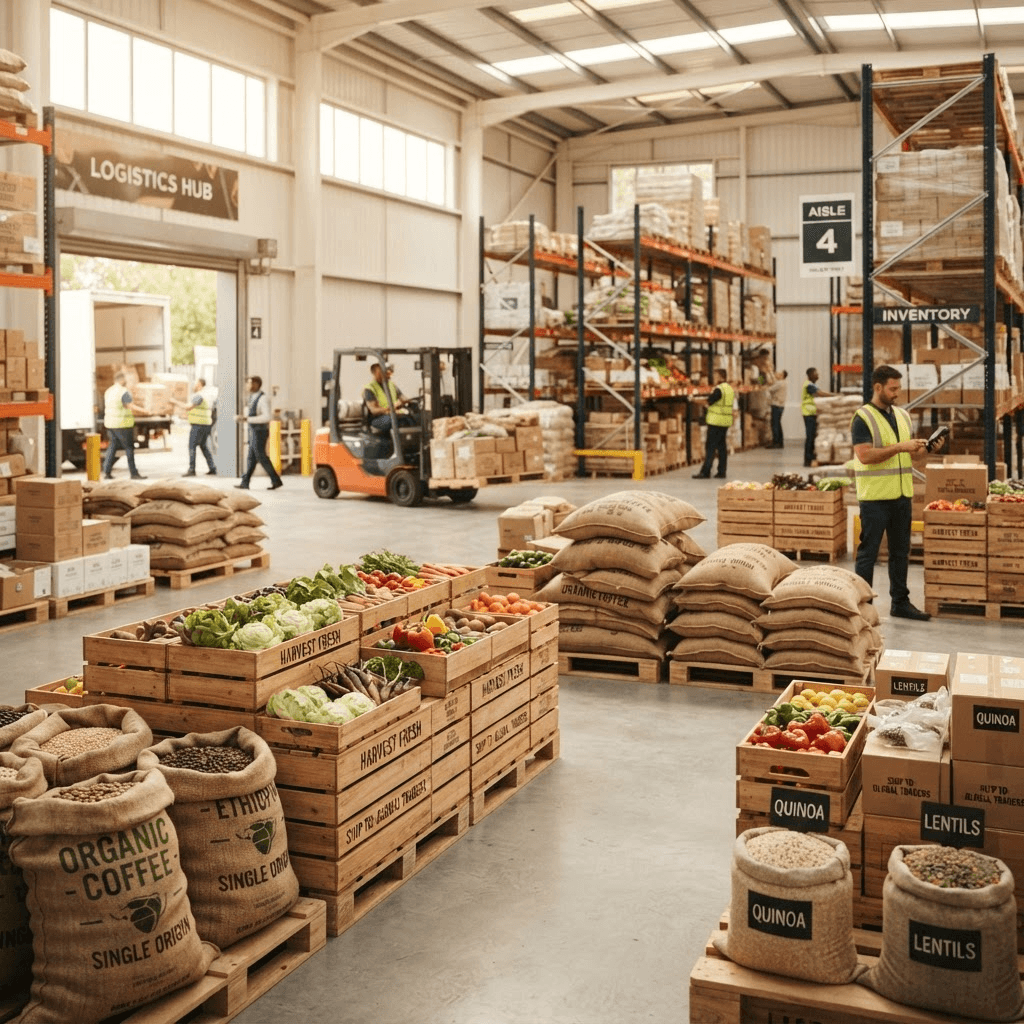
For decades, global wholesale sourcing relied heavily on a delicate currency: blind trust. Buyers sourcing premium commodities across international borders had to rely on paper certificates, third-party audits, and broker assurances. In an increasingly complex global supply chain, this status quo routinely left buyers vulnerable to fraud, mislabeling, and hidden quality degradation.
That paradigm is now shifting fundamentally. Verified provenance is changing how wholesale buyers source. When origin and quality are provable on-chain, trust stops being a leap of faith and becomes a data point.
The Death of the Paper Certificate
Traditional procurement channels have long been plagued by opaque paper trails. A batch of specialty coffee, organic cocoa, or high-grade spices might pass through half a dozen intermediaries before reaching its destination, making genuine origin verification difficult to guarantee.
By anchoring supply chain milestones directly onto an immutable blockchain ledger, wholesale buyers gain real-time visibility into every step of a product's journey. Immutable digital product passports capture everything from batch-level harvest coordinates to processing dates, ensuring that environmental and ethical claims match real-world history.
“Being able to verify exactly where a shipment came from — and how it was grown — is a game changer for our sourcing decisions.”
DePIN: Bridging the Physical and Digital Gap
What makes modern verified provenance so powerful is the integration of Decentralized Physical Infrastructure Networks (DePIN). On-chain verification no longer relies on manual human data entry. Instead, automated IoT sensors monitor soil conditions, storage temperatures, and humidity levels throughout processing and transport:
- Environmental Verification: Real-time telematics verify that climate-sensitive goods stayed within optimal temperature thresholds during transport.
- Geolocation Proofs: GPS-linked harvest logs confirm the exact farm location and verify sustainable land-use compliance.
- Quality Scoring: Sensor-driven data validates post-harvest processing metrics before smart contracts authorize automated payment release.
A Win-Win for Buyers and Producers
For wholesale buyers, data-backed sourcing minimizes operational risk, streamlines regulatory compliance (such as anti-deforestation and fair-trade mandates), and protects brand reputation. For primary producers and agricultural cooperatives, verified provenance allows them to command fair market premiums for superior quality without forfeiting their margins to middleman brokers.
As decentralized technology continues to redefine trade, opaque supply chains will become a relic of the past. The future of wholesale sourcing belongs to those who trade on verifiable facts—turning trust into an actionable, transparent data point.